
Why Is Eating So Confusing?
Three pieces that helped me stop trying to make the right choice—and start understanding why the choice itself feels impossible.

Welcome to Truth Be Told, the food and health journalism publication published by The Whole Truth Foods.
Hello! This is Anushka Mukherjee, from the Media Labs team of the Whole Truth, and this week, it’s my turn to share with you what I’ve been reading. (This is the second of our new fortnightly curations. Read the first here.)
My work includes research and reporting, so I end up reading a lot, and sometimes my eyes just glaze over. Not even the most interesting information can stay in my brain, a real shame of this overwhelming information economy. But this also means that if you have a question, or are curious, there is every way to satiate that curiosity. And good, meaningful writing always stands out.
Lately, I have been trying to understand how to rebuild the fondness I once had, in earnest, for eating. If you are, too, this curation is for you.
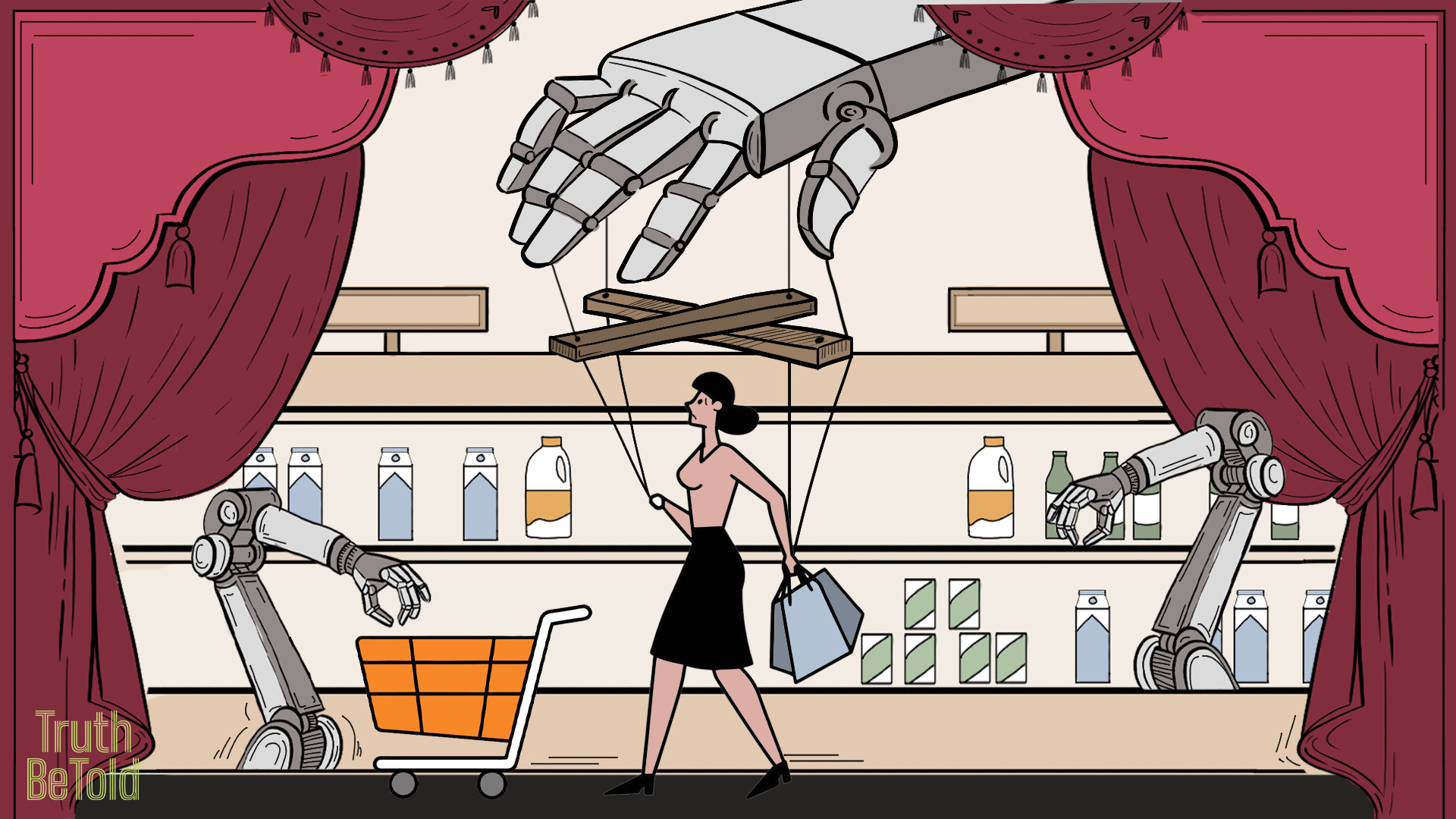
We try and read in an overwhelming information economy, and we try and eat in an overwhelming nutrition economy. For those of us who can afford the choices and have access to them, the choices are boundless. And the messaging is nonstop. Optimise for health. Nutrition. Lower calories. Organic. Ethically grown. Seasonally grown. Fortified with Omega 3. High in protein. High in fiber. Full of antioxidants. The nutrition of 3 rotis (why not have 3 rotis?). Sugarfree. Pesticide residue free. Coffee is bad for you. Actually, black coffee is great for you. Dairy is not meant for humans. But milk is an amazing source of protein for your kids. Meat is good for you. But meat is full of hormones.
Et cetera, et cetera, et cetera.
It’s not that I want to be better able to make the right choices. But I do want to be able to understand what causes all this overwhelm in the first place. The following pieces didn’t teach me how to find the right claim, or scratch off the wrong one. They helped me understand why I keep falling for the confusion. I still don’t know what to eat or what to enjoy, but I am learning how to think about it.
I. Your entire way of life depends on one thing: the cold chain
Nicola Twilley is an author and co-host of the food, science and history podcast Gastropod, which is where I discovered her. She has an obsession: the “artificial winter that has reshaped our entire food system.” We underestimate how important just the invention of first ice, then the refrigerator and then entire cold chain network is. It is why women started going to work, why entire residences cropped up in cities, why grocery stores exist.
But much of it remains unmapped. And all of it remains hidden from us, almost deliberately. Most food companies or producers want us not to bother with all these logistics, all this business of imagining where your fruits and vegetables and fish and meat sit in pure, stone-cold silence before reaching you. It is a technically fascinating transformation of food into a global commodity. But this chain is methodical, precise and so nearly perfect that you start wondering about what the words fresh, natural or farm-to-table even mean.
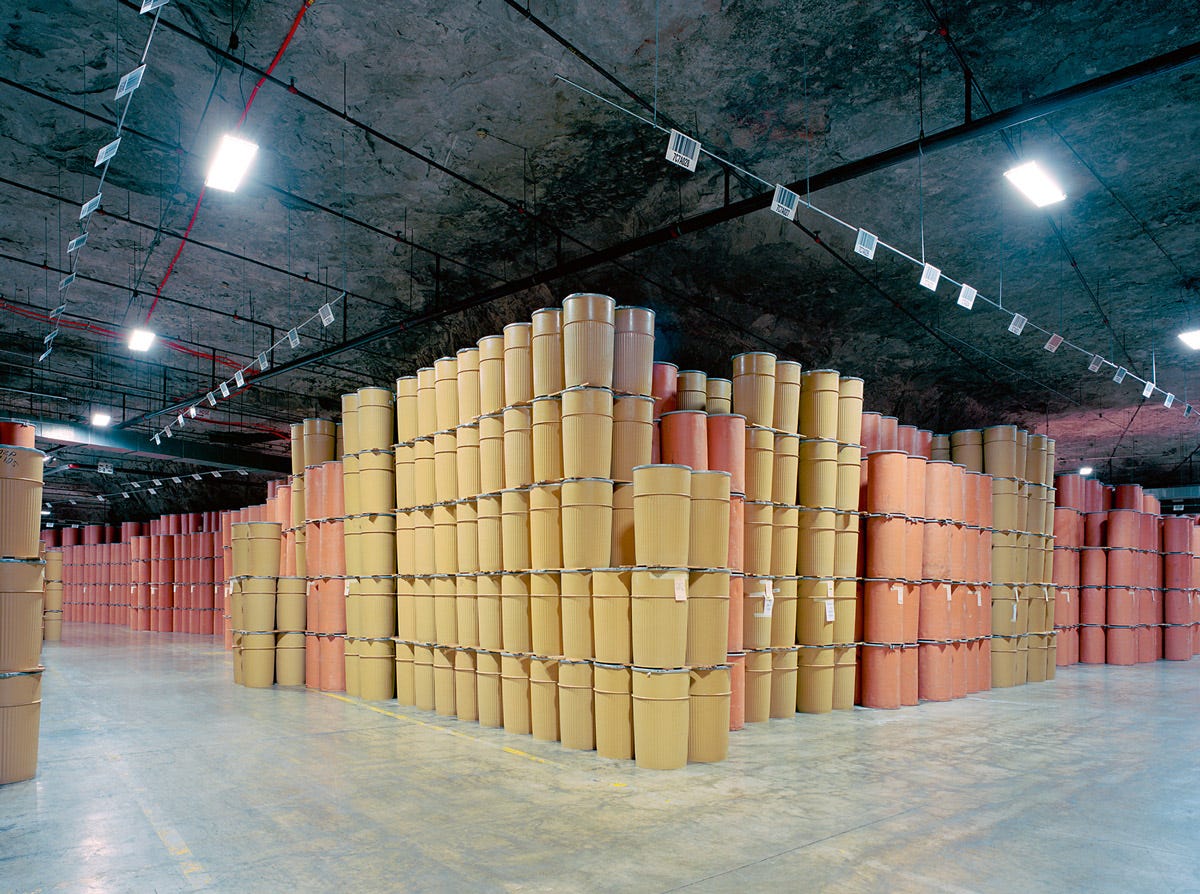
In this crisp, straightforward piece, through six examples—from meat to cheese to bananas to sushi—Twilley shows how the system is built, and how much of what we call “fresh” depends on it.
II. Why is there no pleasure in eating anymore?
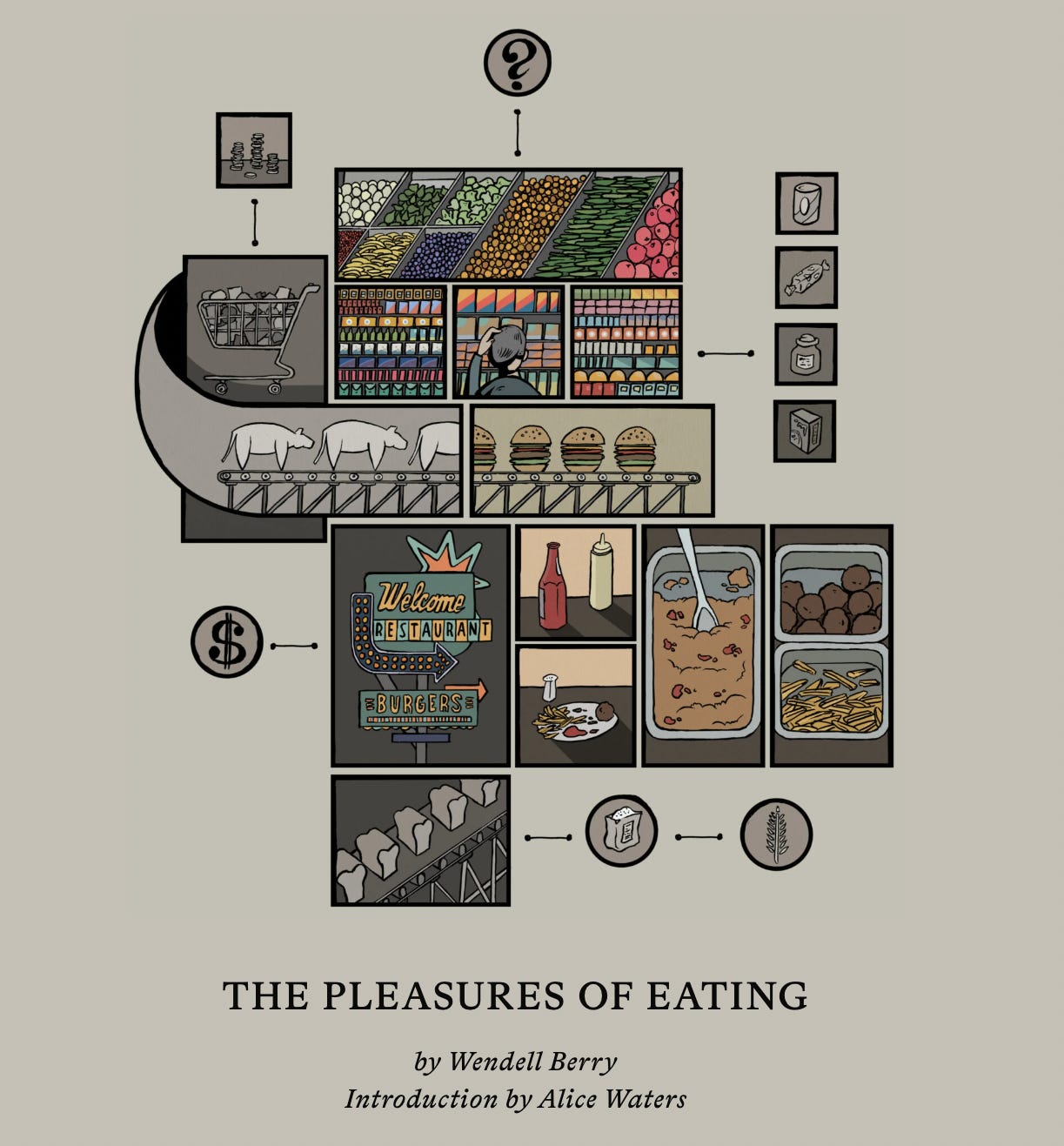
I love this old essay by Wendell Berry, which is titled “The Pleasures of Eating.” You think it is going to be a lovely, lyrical account of all the ways in which food brings you joy: the flavour, the texture, the memory, cooking food for yourself and for others. At least these are some things that make eating pleasurable to me.
But no: with the same lyricism, Berry is also honest and visceral in explaining to you how the pleasure of eating has disappeared. We think we are consumers with free will, but we forget that in the era of industrial food, we are so far away from food production, that at best, we are “passive consumers.”
Think about it: if production is so precise and specialised (like in the case of the cold chain), then so will be consumption. Our choices are not outside what is already made possible and presented to us.
But this essay is not a downer. Berry explains exactly what is the pleasure of eating, and how to get it back, even with a few exact requests. Not to spoil it, but within this global food system, the pleasure, Berry explains, lies simply in consciousness. To be aware, slow down, observe, learn, be uncomfortable, and eventually be connected to the world you are living in.
This essay is soothing to me. It is a reminder of why the act of eating is special to me, and why it is fun.
But it also does another thing: though Wendell Berry wrote this in 1989, reading him now, I find a different argument inside it. Berry does not place the burden of all the bad choices we make on us. He explains that when the eater is distanced so strongly from how, where or by whom his food is made, he becomes an “uncritical victim” of the system. He then makes the “choices” that are offered to him by the industry.
But I wonder—if I no longer buy food based on where it comes from, how do I make these choices? It has become clearer and clearer to me: this distance between the food and me is filled by whatever else is most beneficial to Big Food: high protein, groundbreaking nutritional claims, exotic flavours, exciting textures, heartwarming stories, quickness and convenience.
What happens next?
III. The hidden cost of nutrition misinformation
Two or three cups of coffee a day lowers the risk of cardiovascular disease! I love that. I love coffee, especially a piping-fresh americano with no milk or sugar, so this is the best news I could possibly receive. But how do we know this? Obviously, there has been a real scientific study with real scientists. I checked twice. Great.
Scientist and researcher Stephan J. Guyenet dug into this specific claim, and found a chain of events. First, the study. The authors of the study are quite clear in their paper about the fact that it is an observational study, which means that we can’t be quite sure if coffee really lowers the risk, or perhaps there is some other difference between the coffee drinkers and non-coffee drinkers.
The academic press release with this study is also cautious. But by the time this study makes it to a prominent news headline, all restraint is forgotten.
Through examining some of this nutrition research, the writer explains why exactly we fall for it so easily. The answer is partly in the murky nature of misinformation itself; for instance, how some claims are technically true in what they’re saying, but can still encourage consumers to think that their choices are healthier than they are. It’s a common trick. But, he also explains, the very climate of health and nutrition information in the world right now magnifies this.
And that the cost is not just confusion, but the slow erosion of our ability to trust what we know about food at all. This, I think, is what happens next: the distance Berry described gets filled, and what fills it teaches us to mistrust our own attention.
Here is a short feedback form to help us understand how we’re doing. Would you please share your thoughts? Link here. Thank you!
Love this one!